
Automated Assembly Systems
Automated assembly lines are custom-designed manufacturing systems that automate repetitive assembly, joining, inspection, and handling processes in industrial production. They combine robotics, feeding technology, sensor technology, control systems, and inspection systems to assemble components in a reproducible, precise, and cost-effective manner.
More productivity through customised assembly automation
Increase the Efficiency of Your Production with Automation: The manufacturing industry faces ever-growing demands for productivity, quality, and flexibility. Today’s companies must be capable of assembling complex assemblies and high-precision components quickly and with absolute reliability. Semi- or fully automated assembly systems from Rotte provide an innovative solution to meet these requirements. By using advanced robotic cells, assembly processes can be efficiently automated—reducing production costs, minimizing error rates, and optimizing cycle times. With customer-specific concepts and state-of-the-art control systems, we develop special-purpose machines and assembly systems tailored precisely to your needs.
An automated assembly line is a worthwhile investment in virtually any manufacturing environment where recurring assembly processes must be carried out reliably and with consistent quality. It is particularly cost-effective when production volumes are increasing, quality in manual processes is inconsistent, or labor costs are high. Complex assemblies, tight cycle time requirements, and stringent documentation and inspection requirements also make an automation solution a sound choice.
Last but not least, companies that want to reduce ergonomically demanding tasks or ensure consistent process quality benefit from automated assembly.
Case Study
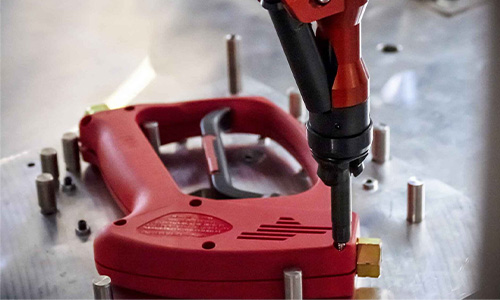
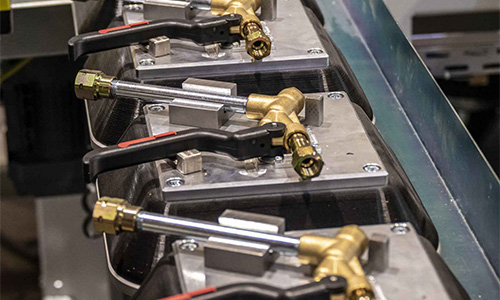
Automated Assembly Line for High-Pressure Cleaner Guns
- Assembly and transport line
- Optical component inspection
- Optional laser part marking
- Custom-developed special tools
The robot picks up the pre-assembled high-pressure cleaning guns from the conveyor belt using position detection from a 2D camera and places them in the correct orientation in the assembly station. In the first station, the two half-shells are pressed together using a pneumatic cylinder and then transferred to the screw-fastening station. In this screw-fastening station, four screws are inserted and tightened. The part is then fed onward.
Afterward, the robot places a “pass” gun on the conveyor belt for good parts, or a “fail” gun on the “fail” component chute. A camera scans the 2D topography of the components and transmits the position data to the control system.
Initial Situation
For the assembly of high-pressure washer guns, a repetitive assembly process should be automated, inspected, and integrated into a defined material flow.
Requirement
The system should detect components, feed them in the correct orientation, press together half-shells, perform screw-fastening operations, separate good and defective parts, and, optionally, enable laser marking.
Solution by Rotte
Rotte developed an automated assembly line featuring robotic handling, a 2D camera for position detection, pneumatic pressing, screwdriving stations, optical component inspection, pass/fail sorting, and custom-designed special tools.
Result
The assembly line ensures consistent assembly quality, reduces the need for manual intervention, and combines assembly, testing, and transport into a single automated process.
A Comparison of Manual vs. Automated Assembly
Manual Assembly
- Suitable for small quantities or a very wide variety of variants
- Reaches economic and time-related limits when dealing with large quantities
- Inconsistent quality
- Ergonomically Straining Activities
- High staffing needs
- Limited traceability
Applications:
- Well suited for prototypes, small production runs, and very frequent product changes

Automated Assembly
- Suitable for high-volume production
- Consistent and traceable process quality
- Predictable cycle times
Semi-automated manufacturing:
- Individual process steps automated
- Employees will continue to perform certain tasks
- Integration of Manual and Automated Process Steps
Fully Automated Manufacturing:
- Automated Sorting, Feeding, Assembly, and Inspection
- Largely without manual intervention
- Relief from Stressful Tasks
Greater Efficiency Through Automated Assembly
Manual assembly processes are often time-consuming, error-prone, and difficult to scale. Especially with large quantities or complex assemblies, this leads to rising costs and quality fluctuations. Automated assembly systems offer a clear advantage: they work with consistent precision, around the clock, and independent of external factors. This improves product quality and significantly boosts productivity.
With flexible robotic cells, a wide range of assembly tasks can be automated and adapted to different product variants. Whether screwing, gluing, pressing, joining, or precision positioning—the technology is highly versatile and ensures safe and efficient component assembly. As production demands evolve, our modular systems can be quickly adapted to new products or processes.
Which processes can be automated?
Automated assembly systems handle a wide range of repetitive process steps in manufacturing. These include feeding and separating components, as well as positioning them correctly. Joining techniques such as screwing, pressing, joining, gluing, or dispensing can also be reliably automated, as can the gripping, turning, and repositioning of components. Optical component inspection and automatic pass/fail sorting ensure quality assurance, while laser marking enables clear traceability. The range of services also includes transport between individual stations and integration into existing production lines.
This list shows only a selection of the possibilities—depending on the component, process, and requirements, we also develop customized automation solutions for other assembly, testing, and handling processes.
Automation as a Strategic Advantage
The implementation of an automated assembly system offers far more than just an increase in efficiency. One of the biggest advantages is the consistently high quality of the components produced, as robots work with an accuracy and in tolerance ranges that are almost impossible to achieve in a manual assembly system, especially in the manufacture of mass products. This reduces reject rates and minimises reworking. Overall, companies benefit from:
- High product quality: Robots deliver precise, consistent results with low scrap rates.
- Improved ergonomics: Physically demanding tasks are automated, reducing the risk of work-related injuries.
- Higher employee satisfaction: Staff can focus on value-added tasks.
- Cost savings: Lower error rates, optimized production times, and reduced labor costs result in a fast return on investment.
- Scalability: Automated systems can be easily adapted to increasing production demands.
Technology Combining Precision and Flexibility
The success of our systems is based on a combination of high-performance robotics, intelligent control systems, and precise sensor technology. This results in state-of-the-art assembly systems that can be flexibly adapted to your industry and products and programmed to meet your specific needs.
The focus is on our industrial robots, which reliably perform even the most precise assembly processes with high repeatability and excellent motion control. Depending on the application, we use articulated-arm robots for complex movements, SCARA robots for fast pick-and-place processes, or collaborative robots that can be seamlessly integrated into existing work environments. We always develop the right solution in close collaboration with our clients—as a customer, you too can individually select the required level of automation, the exact type of assembly operations to be performed, and supplementary technical components to realize complete solutions tailored to your needs. Thanks to modern sensor technology and high-performance gripping systems, our assembly cells are capable of safely assembling even delicate or difficult-to-handle components.
Robotics: Articulated-arm robots, SCARA robots, collaborative robots, and linear axes perform handling, joining, pick-and-place, and assembly tasks.
Feeding Technology: Components are separated, positioned correctly, and transferred to the next station.
Sensors and Image Processing: Sensors and camera systems check the orientation, position, completeness, and quality of components.
Gripping Technology and Special Tools: Custom-designed grippers and tools enable the safe handling of even delicate or difficult-to-handle components.
Control Technology: PLCs, HMIs, and interface technology control the system, visualize processes, and enable diagnostics, maintenance, and integration.
Testing Technology and Quality Assurance: Test stations inspect assembly results, sort good and defective parts, and help ensure consistent process quality.
Versatile Applications in Industrial Production
Automated and flexible assembly systems are essential across many industries. In the automotive sector, they enable high-precision engine assembly. In electronics, they support the handling of PCBs, sensors, and microcomponents. In the furniture industry, they join panels, fronts, handles, and fittings. In medical technology, they ensure strict hygiene compliance and process safety. In packaging, machinery, and consumer goods manufacturing, flexibility and adaptability to changing product demands are key.
Our tailored assembly solutions are ideal for companies introducing new product lines or managing high product variety in their production.
Automotive Industry
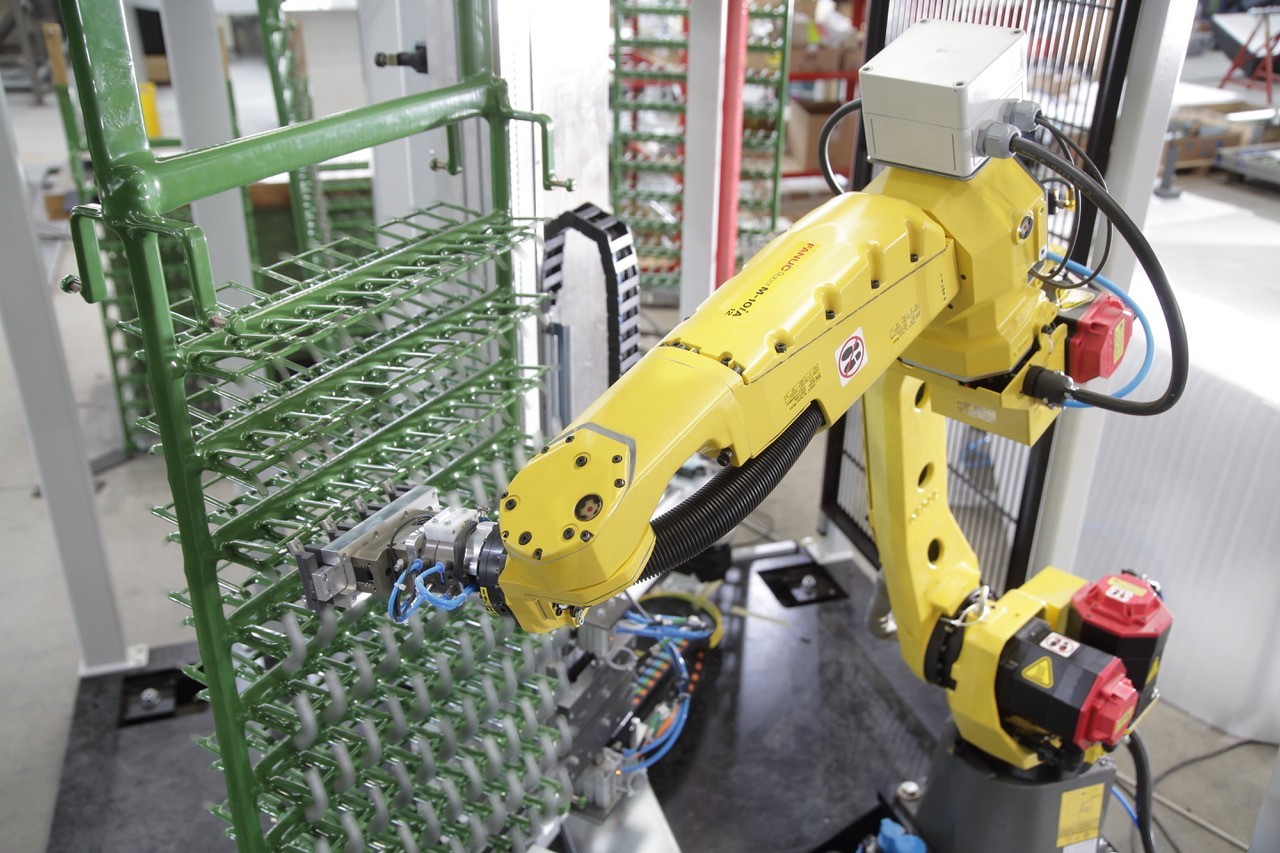
Assembly and testing of subassemblies, plastic parts, housings, connectors, control elements, or technical components.
Electrical Industry
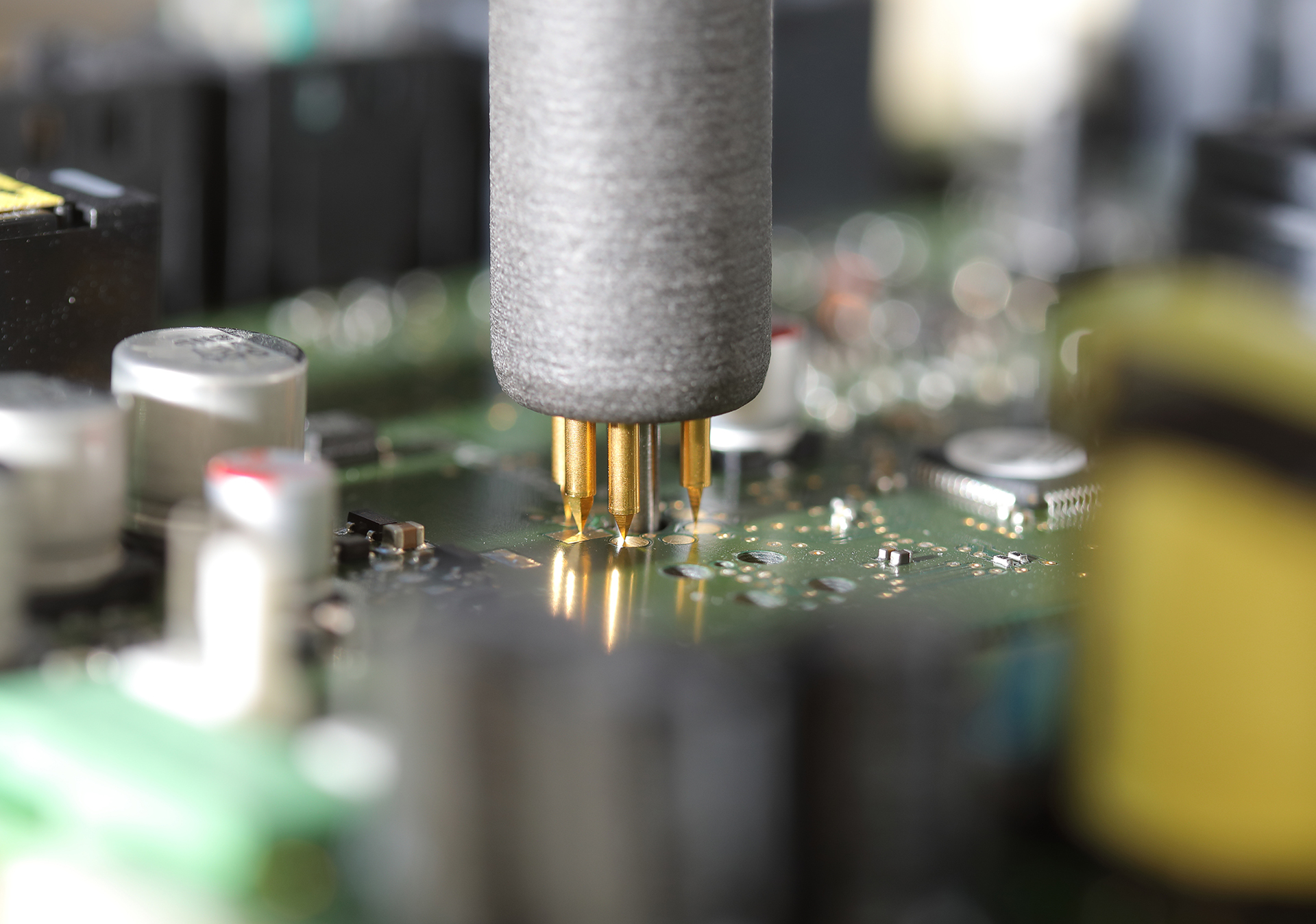
Handling and assembly of printed circuit boards, sensors, connectors, small parts, and precision mechanical components.
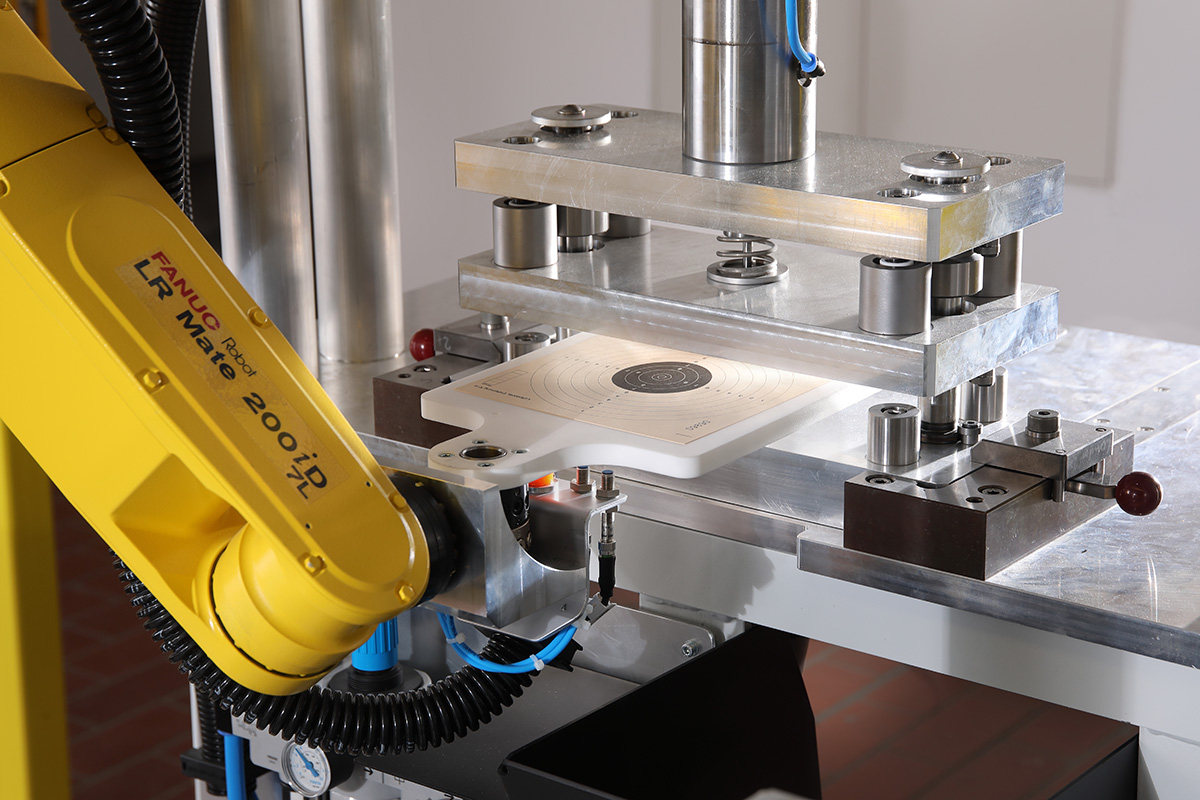
Medical Technology
Assembly processes with high standards for cleanliness, process reliability, documentation, and consistent quality.
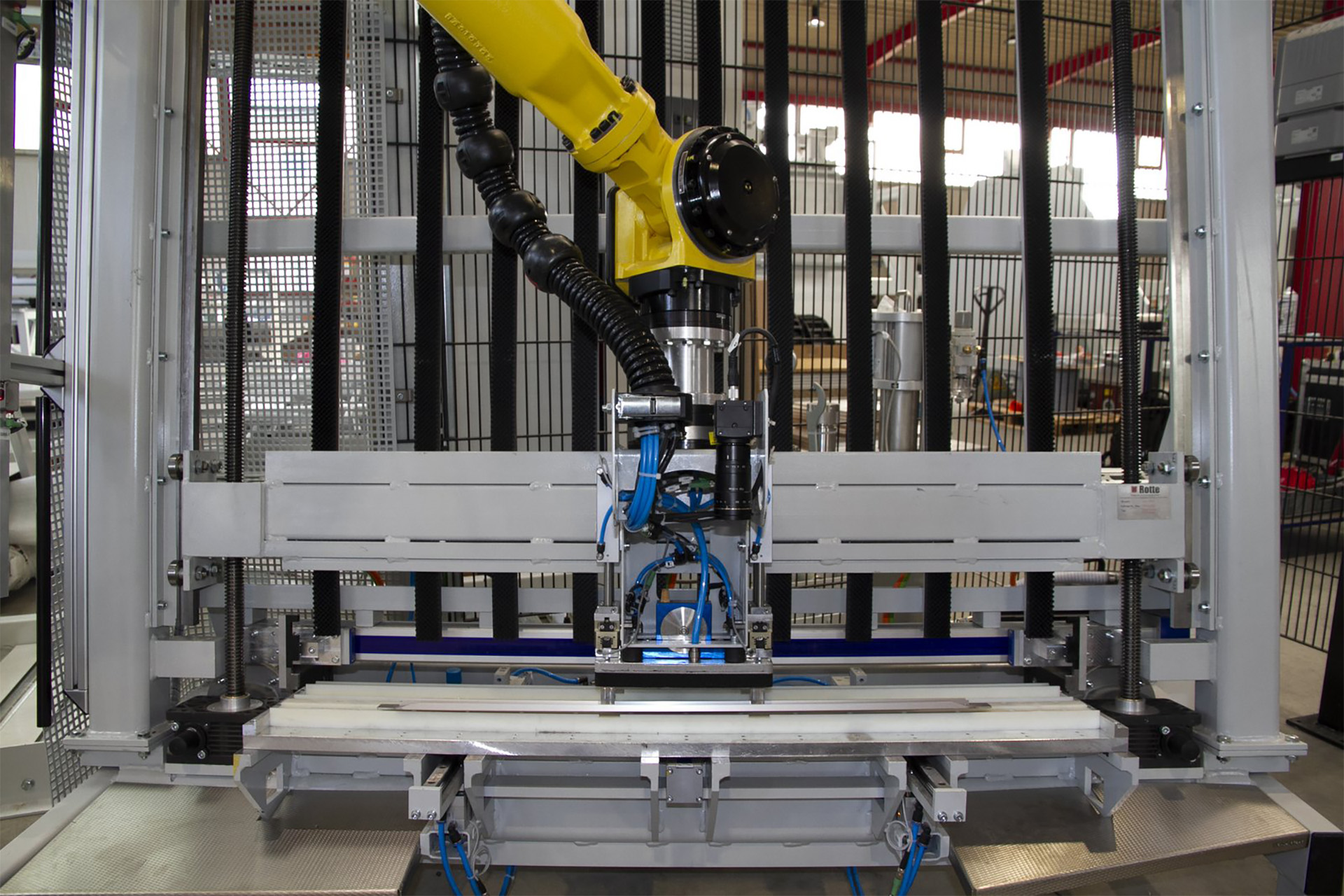
Furniture Industry
Installation of panels, fronts, handles, hardware, and fasteners.
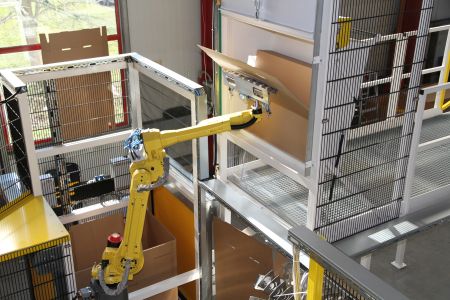
Packaging Industry
Automated feeding, assembly, sorting, labeling, and transfer of components.
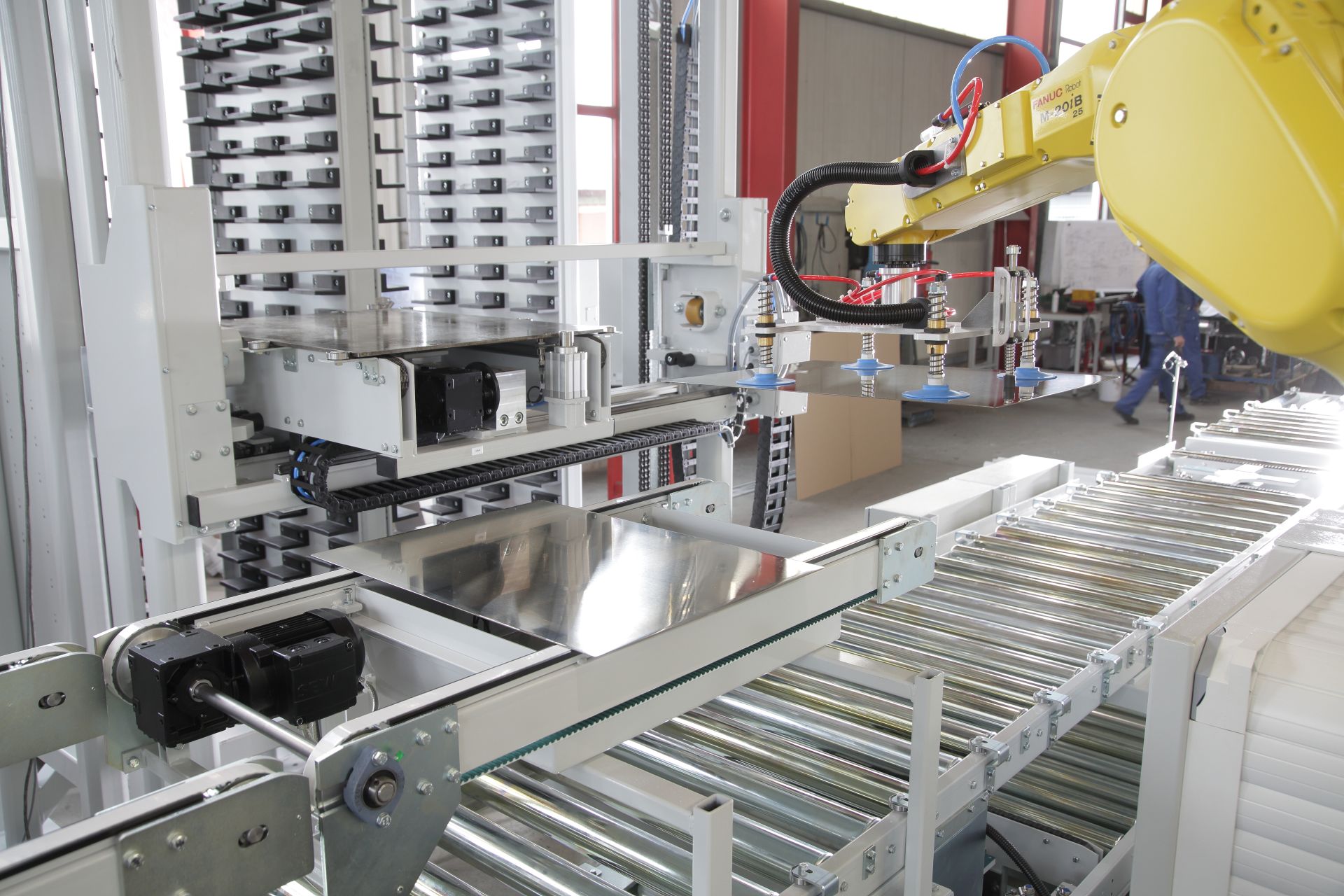
Mechanical Engineering and Consumer Goods Manufacturing
Custom assembly and testing systems for a wide variety of products and changing production requirements.
FAQ – Frequently Asked Questions About Assembly Automation
What is an automated assembly line?
An automated assembly line is a manufacturing system that automatically performs assembly, joining, inspection, and handling processes. It is customized to specific components, cycle times, quality requirements, and existing production processes.
When is an automated assembly line a good investment?
It is particularly worthwhile for recurring assembly processes, high production volumes, strict quality requirements, a shortage of skilled workers, ergonomically demanding tasks, or rising error rates in manual processes.
What processes can automated assembly lines handle?
Processes that can be automated include feeding, separating, positioning, screwing, pressing, joining, gluing, inspecting, sorting, marking, and transporting components.
What types of robots are used in assembly lines?
Depending on the task, articulated-arm robots, SCARA robots, collaborative robots, linear axes, or special handling systems are used.
For which industries does Rotte build automated assembly lines?
Rotte develops automated assembly systems for the automotive industry, the electrical industry, the furniture industry, medical technology, the packaging industry, mechanical engineering, and consumer goods production, among others.
How does a project with Rotte work?
A project begins with an analysis of the existing assembly processes. This is followed by concept development, design, manufacturing, assembly, integration, commissioning, training, and, upon request, maintenance and optimization.

One Company, Many Advantages
Ulrich Rotte Anlagenbau & Fördertechnik GmbH is your specialist in custom machinery. In addition to our innovative solutions in special-purpose machinery and automation technology, you also benefit from a wide range of customer and after-sales services:
Your Advantages at a Glance:
- Decades of experience in special-purpose machinery
- Extensive know-how across all areas of automation technology
- High expertise in the latest technologies and applications for Industry 4.0
- All services from a single source—from development and design to manufacturing, assembly, commissioning, and regular on-site maintenance
- Optional training of your machine operators, technicians, and supervisors at your facility
- Mechanical engineering made in Germany – we design and manufacture exclusively in Germany
- Personalized customer support – you will always have a qualified contact person available


